
Curricular Research
Curricular Research
Curricular Research
Effects of Stress on Convergent and Divergent Thinking in Males and Females
Effects of Stress on Convergent and Divergent Thinking in Males and Females
Tulika Banerjee, Ramyani Ghosh, Upasana Bhattacharjee, Vaibhav Kumar
Tulika Banerjee, Ramyani Ghosh, Upasana Bhattacharjee, Vaibhav Kumar
Tulika Banerjee, Ramyani Ghosh, Upasana Bhattacharjee, Vaibhav Kumar
CS 6795 Intro to Cognitive Science, Georgia Institute of Technology
CS 6795 Intro to Cognitive Science, Georgia Institute of Technology
CS 6795 Intro to Cognitive Science, Georgia Institute of Technology
Abstract
Convergent and Divergent thinking are two of the most popular approaches to problem solving, creative thinking and decision making. Human creativity has long been a subject of interest to cognitive scientists. To further understand creative thinking abilities, it is important to recognize the effects of stress on them.
We studied how induced stress affects the cognitive processes of convergent and divergent thinking and further identified differences in the impact observed on males and females.
We analyzed both kinds of creative thinking through standard tests and observed the differences in individuals’ performances with induced stress and without.
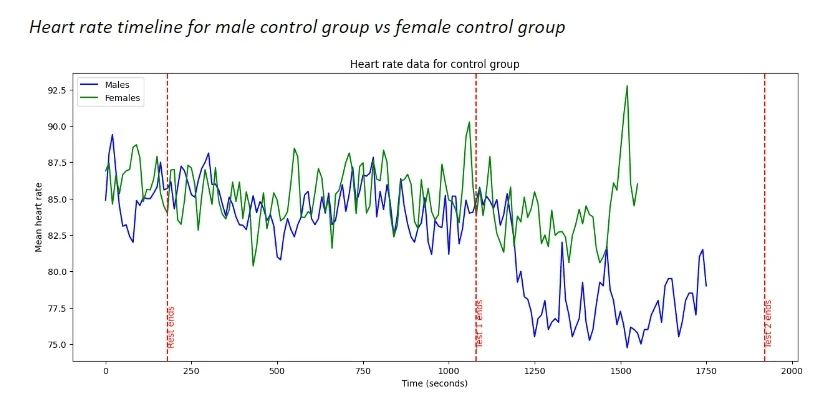
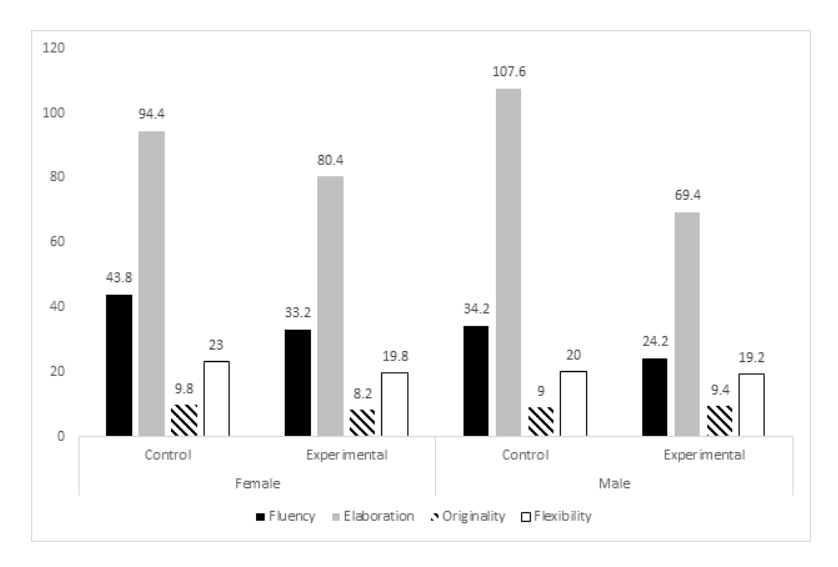
Our results showed that both males and females registered a decrease in their performance as a result of induced stress.
Furthermore, we tested our hypotheses that these said effects are observably different in males and females, noting that males showed a greater negative impact on their problem-solving abilities as compared to females when exposed to stress.
Keywords
stress, creativity, cognitive science, convergent thinking, divergent thinking, alternative uses test, remote associates test, problem solving
Method
We conducted a cognitive science experiment with a total of 20 participants, divided into four groups: control female, control male, experimental female, experimental male. The control groups took the tests for convergent and divergent thinking in a normal, classroom-like environment, while the experimental groups took the tests under simulated stress conditions.
Access
See More
See More
See More
r/AskWomen
Online Community, User Research
r/AskWomen
Online Community, User Research
r/AskWomen
Online Community, User Research
Multimodal Sentiment Analysis
NLP, Jupiter NB, Python
Multimodal Sentiment Analysis
NLP, Jupiter NB, Python
Multimodal Sentiment Analysis
NLP, Jupiter NB, Python
©2023 Tulika Banerjee
©2023 Tulika Banerjee
©2023 Tulika Banerjee
Abstract
Convergent and Divergent thinking are two of the most popular approaches to problem solving, creative thinking and decision making. Human creativity has long been a subject of interest to cognitive scientists. To further understand creative thinking abilities, it is important to recognize the effects of stress on them.
We studied how induced stress affects the cognitive processes of convergent and divergent thinking and further identified differences in the impact observed on males and females.
We analyzed both kinds of creative thinking through standard tests and observed the differences in individuals’ performances with induced stress and without.
Our results showed that both males and females registered a decrease in their performance as a result of induced stress.
Furthermore, we tested our hypotheses that these said effects are observably different in males and females, noting that males showed a greater negative impact on their problem-solving abilities as compared to females when exposed to stress.
Keywords
stress, creativity, cognitive science, convergent thinking, divergent thinking, alternative uses test, remote associates test, problem solving
Method
We conducted a cognitive science experiment with a total of 20 participants, divided into four groups: control female, control male, experimental female, experimental male. The control groups took the tests for convergent and divergent thinking in a normal, classroom-like environment, while the experimental groups took the tests under simulated stress conditions.
Access
Abstract
Convergent and Divergent thinking are two of the most popular approaches to problem solving, creative thinking and decision making. Human creativity has long been a subject of interest to cognitive scientists. To further understand creative thinking abilities, it is important to recognize the effects of stress on them. We studied how induced stress affects the cognitive processes of convergent and divergent thinking and further identified differences in the impact observed on males and females. We analyzed both kinds of creative thinking through standard tests and observed the differences in individuals’ performances with induced stress and without. Our results showed that both males and females registered a decrease in their performance as a result of induced stress. Furthermore, we tested our hypotheses that these said effects are observably different in males and females, noting that males showed a greater negative impact on their problem-solving abilities as compared to females when exposed to stress.
Keywords
stress, creativity, cognitive science, convergent thinking, divergent thinking, alternative uses test, remote associates test, problem solving
Method
We conducted a cognitive science experiment with a total of 20 participants, divided into four groups: control female, control male, experimental female, experimental male. The control groups took the tests for convergent and divergent thinking in a normal, classroom-like environment, while the experimental groups took the tests under simulated stress conditions.